I’ve spent nearly two decades studying dogs.
They taught me to study people.

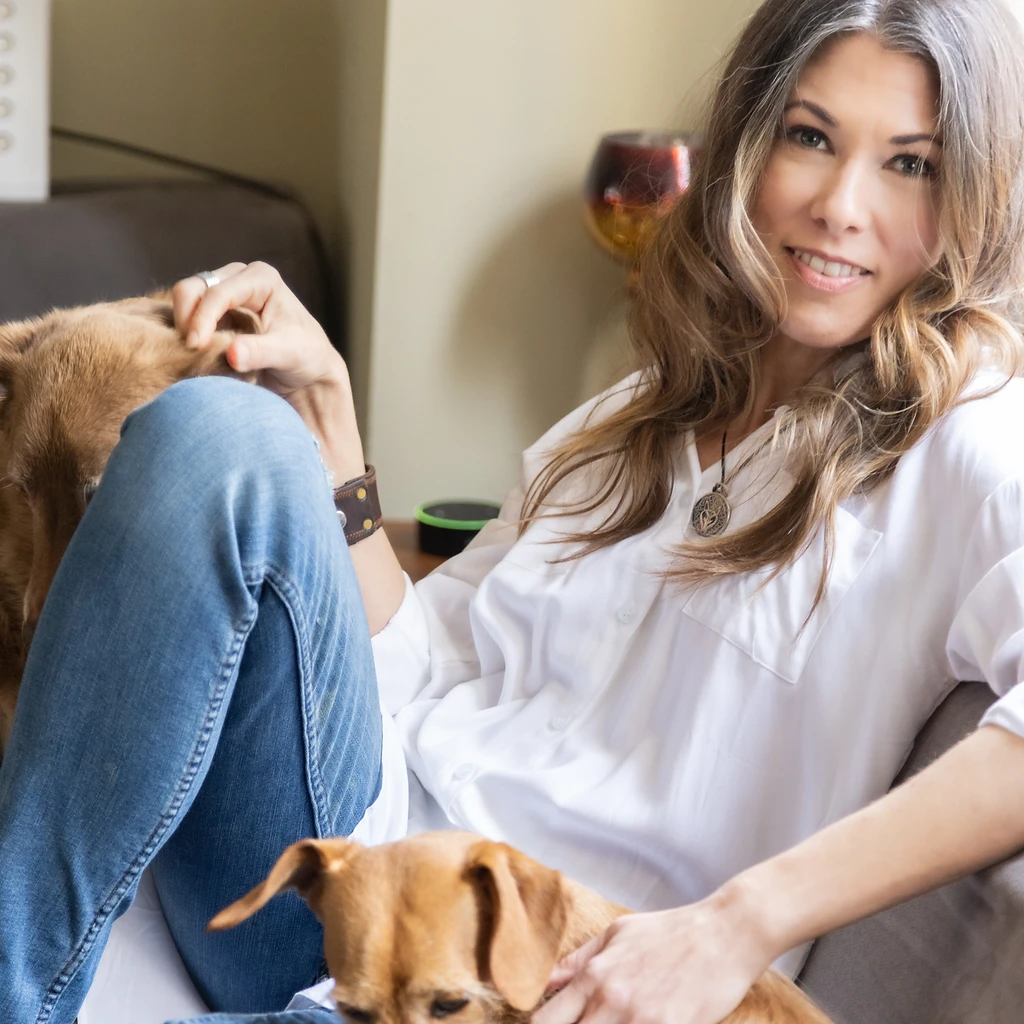
The longer I worked in canine behavior, the clearer something became: understanding the dog was only part of the work.
Behavior lives inside a much larger picture—physical health, emotional wellbeing, nervous-system state, environment, learning history, relationships, unmet needs, human behavior, and the countless patterns being reinforced on both ends of the leash.
My work grew from there.
The dog may be where the conversation begins. Rarely is it where it ends.
The work didn’t develop in a straight line.
Neither did I.
I don’t think of these as “phases.” A phase implies that one thing ended and was replaced by another. These chapters accumulated.
The nutritionist is still there.
The coach is still there.
The dog trainer and behavior specialist is still there.
The writer is still there.
The rescuer is still there.
The designer is still there.
Each chapter gave me a language for the next.
nothing was wasted.
Before the Dogs
The human body. The human mind. The nervous system.
Before I ever worked with dogs, I worked with people. Health, fitness, nutrition, life coaching, stress management, trauma, and nervous-system work—years spent studying the human end of behavior: change, habits, motivation, resistance, communication, accountability, emotional regulation, the effects of chronic stress, and the enormous distance that can exist between knowing something and actually living it.
That work mattered more than I understood at the time. Years later, I would come to understand just how much of working with dogs is really about working with people.


Lobo
The dog who changed the direction of everything.
Lobo was the hinge.
He was my first dog who was entirely mine. My sidekick. We did everything together—walks, hiking, jogging, errands, afternoons journaling in parks and cafés. I knew very little about raising a dog then, but I loved him enormously and wanted to learn.
Then my life changed.
A divorce brought upheaval, instability, stress, fear, and uncertainty into my world. And somewhere inside all of that, Lobo changed too.

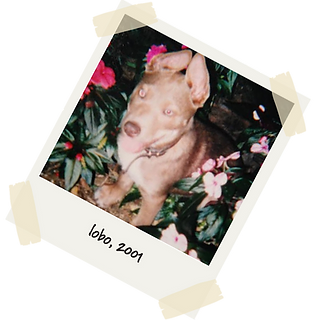
The social, well-adjusted dog I’d known became increasingly reactive. Highly protective. Dogs became a problem. Eventually, people did too. I sought trainer after trainer. All were just popping him full of treats and working on obedience directives. And though he could rock out obedience like the best of them, his behavior was only getting worse.
My anxiety increased as his behavior intensified. I began avoiding situations I couldn’t control. Our world became smaller. Eventually, after exhausting my finances on training and finding myself unable to afford where I was living, Lobo and I landed in a living situation where he had to remain isolated from the other animals in the home.

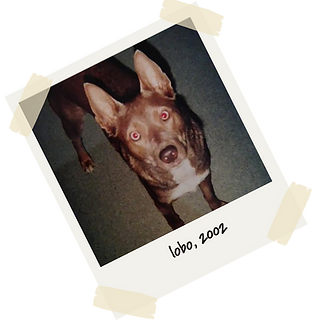
Then, one night, everything broke.
After being startled and having a stranger reach into his space, Lobo bit him.
Suddenly, I had a dog with a bite history—and a dog who was no longer welcome in the home where I was living.
I had nowhere else to go. No support system to fall back on. And I had already spent thousands of dollars I didn’t have trying to find help for him, working with multiple trainers and exhausting every option I knew existed.

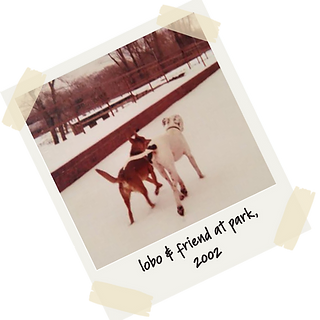
I wasn’t trying to get rid of Lobo.
I was trying desperately to find a way to keep him.
But one by one, every door seemed to close.
And despite everything, I couldn’t save him.
It was only after Lobo was gone that I began to understand how much I hadn’t known.
I had hired trainer after trainer because I was desperate to help him. I trusted that they knew what I didn’t. We worked on obedience. We practiced cues. Treats were handed out by the handful. Behind closed doors and within carefully controlled environments, Lobo could perform beautifully.

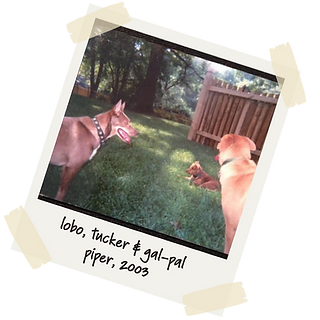
But life wasn’t happening behind closed doors.
And none of it had taught me how to understand the dog underneath the behavior.
No one had taught me what his behavior was communicating. What his emotional and psychological state had to do with it. How his environment, experiences, unmet needs, relationships, and my own state were influencing what was happening. I hadn’t been taught how all of those ingredients came together to create the behavior everyone was trying so hard to stop.

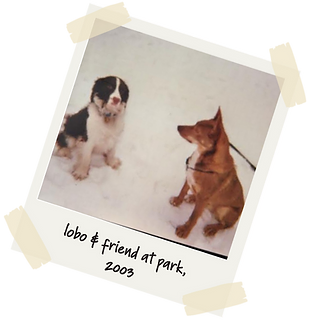
I had been taught how to ask Lobo to do things.
I hadn’t been taught how to understand what he was trying to tell me.
By the time I understood the difference, he was gone.
That is a truth I have had to live with. It is also a truth far too many dogs continue to pay for—with their homes, and sometimes their lives.
I couldn’t change what I hadn’t known then. But I could make damn sure I learned it.

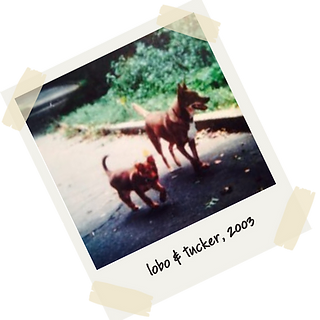
The day after losing Lobo, I was walking my other dog, Tucker, down King Street in Old Town Alexandria, Virginia. When we reached the end of the street, I saw something I couldn’t explain.
Across the sidewalk, in enormous bright-pink spray-painted letters, was one word:
LOBO.

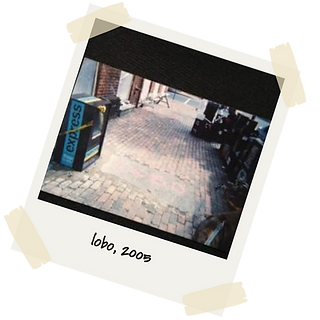
I stopped.
I asked a man nearby if he knew who had written it or what it meant. He didn’t. He said it had been there all morning.
Tucker and I ran to CVS, bought disposable cameras, and hurried back. I photographed that word over and over again.
His name.
Right there on the sidewalk.
Lobo was telling me he was still with me. That he was okay.
What I couldn’t have known was that he was also pointing me toward the work that would shape the rest of my life.
I began studying dog training and behavior—but I knew I needed to look beyond obedience.
I wanted to understand what the trainers I had hired hadn’t been able to explain. What they didn’t know. What they weren’t teaching. What they may not have known to look for.
So I began looking beneath behavior—at psychology, emotion, the nervous system, environment, relationship, communication, unmet needs, and the human being standing at the other end of the leash.
Behavior was information.
There had been an entire conversation happening beneath what I could see. I simply hadn’t learned the language in time to help Lobo.
The questions I couldn’t answer for him became the questions I would spend the next two decades helping other people answer for their dogs.
PackFit
Learning the dog meant learning the human.
So I went looking for answers.
Lobo changed the questions I was asking. More than that, he changed the way I thought about dog training—what it was, what it meant, and what it actually required of the person doing it.
He punctuated the difference between obedience training and behavioral work: the difference in skill sets, the depth of understanding required, and the enormous territory between teaching a dog what to do—and teaching them how to be.
Dog training is far more than teaching a dog to sit, stay, heel, come, or stop doing something we don’t like. It is about understanding the actual dog.
I didn’t want to simply stop a behavior. I wanted to understand why it had appeared in the first place. What it was trying to convey. What was driving it. What the dog was experiencing—and what role the human, the relationship, and the environment were playing in it.
And the deeper I went, the more I began to see just how incomplete—and, in many ways, misleading—the conventional dog-training world could be.

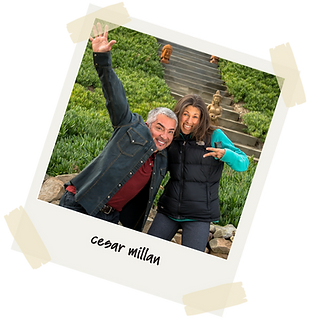

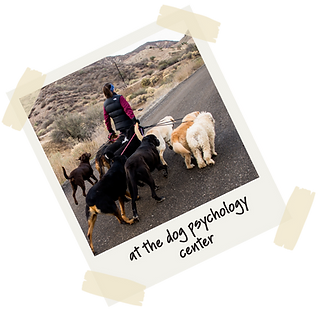
I became a dog trainer because of Lobo.
That education became PackFit Dog Training & Behavior — a practice serving dogs and their humans throughout the Northern Virginia / Washington, DC region for nearly fifteen years.
Through dog after dog, human after human, patterns began revealing themselves. What presented as a “dog problem” was never just about the dog.

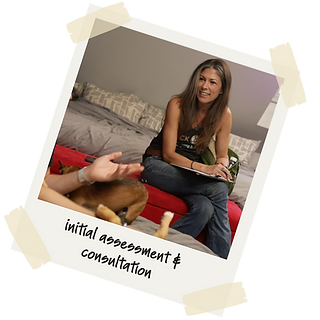

Behavior never exists in isolation.
It lives inside nervous systems, relationships, environments, histories, habits, unmet needs, communication — and the emotional states of both species involved.
And when something surfaced behaviorally, the dog was usually the one labeled:
aggressive.
dominant.
stubborn.
anxious.
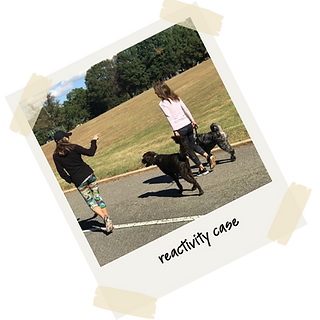
reactive.
difficult.
problematic.

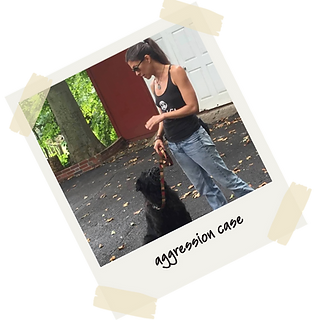
The dog was only one half of the conversation.
What I had once thought of as a separate career — human health, behavior, coaching, stress, habits, emotional regulation, the nervous system — had not been separate at all.
It had been preparing me for this work all along.
I had gone looking for a better way to understand dogs.
Dogs brought me back to people.

Authorship
For years, the work happened dog by dog, human by human.
But the same truths kept surfacing.
The dogs were different.
The people were different.
The circumstances were different.
The patterns weren’t.
I began writing because there were things I wanted people to understand before they ever needed someone like me.
Things about relationship. Responsibility. Attachment. Accountability. Needs. The importance of structure. Communication — and what we’re communicating without speaking at all. Nervous-system awareness. What our habits, patterns, and rituals are teaching.
The things we reinforce without realizing it. The environments we create. The emotional states we bring into the relationship. What a dog is experiencing beneath the behavior we can see.
All of it.
About what dogs reveal when we learn how to listen.
And, increasingly, about what they reveal about us.
Writing became another way of doing the work.
Not instead of working with dogs and people.
An extension of it.

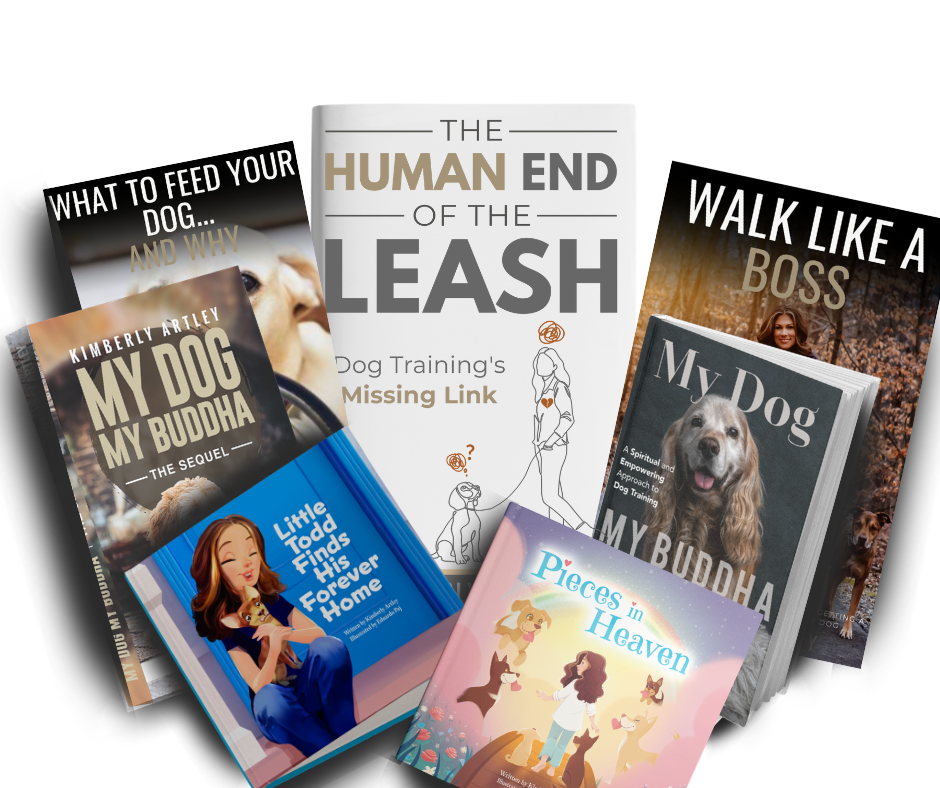
My Dog, My Buddha came first. Then My Dog, My Buddha: The Sequel. The Zen of Dog Training. What to Feed Your Dog... and Why. Walk Like a Boss.
The subjects changed, but the questions underneath them kept widening: behavior, relationship, health, responsibility, and what it really means to share a life with another species.
Then life changed the writing, too.
Within twenty-three months, I lost all four of my senior dogs.
Grief gave me a different language.
Pieces in Heaven came from that season — from trying to find words for a kind of loss that had changed the shape of my life.

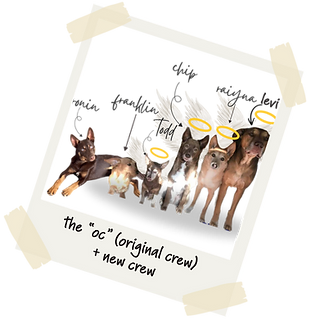
But their stories weren’t finished simply because their lives were.
I began the Forever Home children’s book series to tell the story of how each of those four beloved dogs had found their way to me.
Each had arrived differently.
Each had a story of their own.
And each became an enormous part of mine.
Little Todd Finds His Forever Home was the first.
Three more stories remain to be written.
And while those stories were waiting for me, another book had already been consuming years of my life.
The Human End of the Leash: Dog Training’s Missing Link
Four years in the writing.
Nearly two decades of dogs and humans had given me a lot to say. And while I’d been sharing much of it through my teaching, writing, courses, social posts, and work—in general—over the years, this book asked me to go deeper.
Deeper into behavior and psychology. Attachment. Trauma. The nervous system. Emotional health. Human patterns. Relationships. Responsibility. Perception.
Into the whys beneath what we see — what drives responses, reactions, choices, communication, and behavior on both ends of the leash.
And into all the things happening at the human end of the leash that conventional dog training so often leaves out of the conversation.
Four years of writing. Rewriting. Questioning. Revisiting. Refining.
It’s my most recent release… and definitely not my last.
Because while I was finishing one story, life was already writing another.
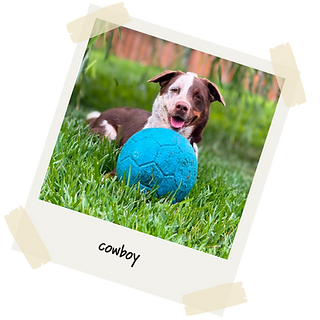
A dog who’d been dumped in the CA desert— pregnant— entered my life. She made her way to an organic waste management facility and bedded down under a heavy metal trash bin to give birth to 9 babies. 3 were found already deceased. Another passed a day later. One more— Cowboy— was hanging on by a thread.
And what followed became one of the most unbelievable rescue journeys I have ever lived through.
That story is becoming my next book:

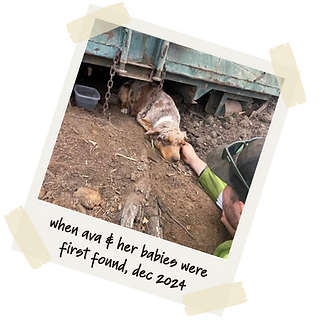
The Long Way Home
Sometimes the longest journey home isn’t the dog’s. It’s ours.
Evolution
The work kept changing shape. The reason for it never did.
PackFit had been home to my behavioral work for nearly fifteen years.
But a business and the work itself aren’t necessarily the same thing.
When that chapter ended, I didn’t stop studying dogs.
I didn’t stop studying people.
And I certainly didn’t stop asking why.
If anything, the questions had gotten bigger.
What changed was the container.
The story I was writing was still unfolding in real life.
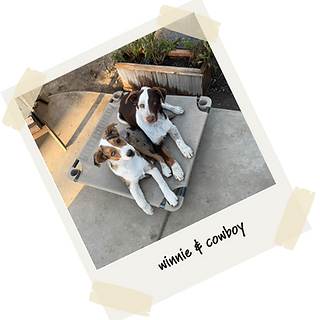
What followed with Ava, Cowboy, Winnie, and the dogs whose lives intersected with theirs forced me to look beyond the individual dogs and at something larger:
the systems they were moving through.

I had entered rescue believing that the same level of responsibility, behavioral understanding, thoughtful decision-making, and accountability I had spent my career applying to dogs would exist there, too.
What I encountered instead — across multiple situations — challenged that assumption.
There was fraud.
First, I encountered a fraudulent rescue situation.
Fraud and misrepresentation were part of what began opening my eyes to serious problems that exist within rescue.
Separately, I encountered another rescue situation — not fraud in the same way, but something different and equally consequential.
A rescue culture heavily driven by emotion and urgency without the structure, order, canine and behavioral fluency, safeguards, disciplined decision-making, preparation, and accountability necessary when taking responsibility for vulnerable dogs.
It was within that context that the Winnie and Cowboy foster placement occurred.
I had been told the dogs would remain in one location for approximately five days before being placed so they could be observed and learned.
I had also been told there was an established, fully vetted foster network — people who had worked with the rescue for years.
Instead, less than twenty-four hours later, Winnie and Cowboy were moved into a foster home without my knowledge or consultation.
The person had been recommended to the rescue, but was not part of the established foster network I had been told about.
I had not vetted this home.
I had not been asked whether I believed it was appropriate for Winnie and Cowboy.
I was not even made aware that the placement was happening.
Had I been consulted, I never would have agreed to that placement.
There were multiple people living in the home, an intact male dog, little to no structure or order, insufficient canine and behavioral fluency, and environmental and household dynamics I would have wanted thoroughly assessed before entrusting two already-vulnerable dogs to that situation.
Then a door was left open.
Both dogs escaped.
Approximately fifteen minutes later, Winnie was hit by a car and died on impact.
Cowboy disappeared overnight into coyote territory and, by the grace of God, was found the following day nearly three miles away.
Winnie never came home.

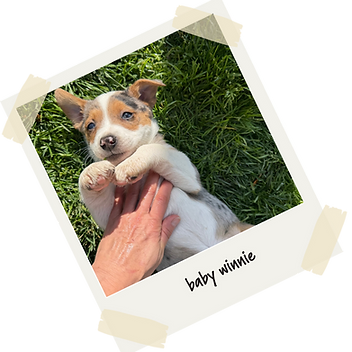

Her likeness would eventually become the face of You Had Me at Woof™.
Not because I wanted her death to become a symbol.
Because I never wanted what happened to her to become just another story.
But that event is one part of a larger story.
The larger realization developed through multiple experiences.
Fraud and misrepresentation.
Emotion and urgency taking the place of sound judgment.
A lack of canine and behavioral fluency.
Inadequate vetting.
Insufficient structure, preparation, support, and accountability.
Human ego.
Dogs being moved because someone was available or willing rather than because the placement was truly appropriate for the individual dog.
Decisions being made around dogs without sufficiently understanding who those dogs were.
And ultimately, dogs absorbing the consequences of human decisions.
Good intentions are not the same as competence.
Willingness is not the same as capacity.
Available is not the same as appropriate.
Dogs being moved through rescue without enough understanding of who they actually were.
Behavior misunderstood or mislabeled.
Individual needs overlooked.
Foster placements determined largely by availability and blind trust — who was willing or able to take the dog, rather than who was actually prepared, equipped, and appropriate for the individual dog.
Fosters taking responsibility for dogs without the proper education, preparation, or support they need to understand the individual dog in front of them.
Adoption placements driven by emotion and urgency — the pressure to get a dog out, get a dog placed, or find a home — rather than taking the time to determine true compatibility.
Adopters falling in love with the idea of a dog without first understanding the dog himself.
Commitments made in an emotional moment, without fully understanding what those commitments may ask of them.
And when the dog fails to match the image, expectation, or idea they had in mind, the commitment becomes conditional.
The dog is returned.
Yet again.
And with every transition, the impact it has on the individual dog grows.
The disruption.
The confusion.
The stress.
The loss of security and trust.
The behavioral and emotional consequences that can follow.
And when the safeguards are missing — when the people, systems, and decisions surrounding a dog are not equipped to meet the responsibility they have taken on — the dogs often absorb the consequences.
Winnie did.
Cowboy did.
And they were not the only dogs I watched this happen to.
I learned how difficult it can be to resist the pressure to place a dog simply because someone is willing to take them.
I knew Cowboy.
I knew his soft, sensitive nature.
I knew his history.
I knew what he’d already been through.
And still, decisions were being made around him — placements pursued because someone was willing, not because the situation was truly right for him.
Available isn’t the same as appropriate.
Willing isn’t the same as equipped.
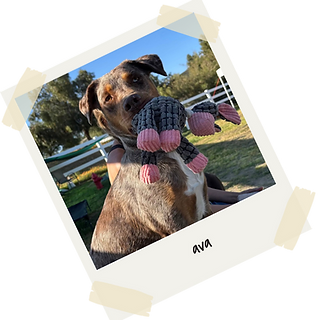
And I know Ava.
One of the most impressive dogs I’ve ever known.
Deeply attuned. Resilient as all hell. Strong energy. Confident. Highly driven.
And finding the right home for her — one where both ends of the leash could genuinely thrive — has been incredibly challenging.
Not because there haven’t been people willing to take her.
Because willingness alone isn’t enough.
The human matters.
The environment matters.
Lifestyle matters.
Capability matters.
Compatibility matters.
And what people will realistically step up and provide matters.
Because there is also a difference between what someone could theoretically provide and what they are realistically willing and prepared to provide consistently, day after day, for the dog actually standing in front of them.
Rescue isn’t only a personal responsibility. It’s a social and public one, too.
The dog we place becomes someone’s neighbor. Someone’s encounter on a trail. Someone’s experience at the veterinarian. Part of a community.
Responsible placement means considering not only whether someone wants the dog, but whether that person can responsibly meet the dog in front of them — and is realistically willing and able to provide what that individual dog requires, day after day — so that the pairing sets the dog, the human, and the world around them up for success.
Sometimes the responsible decision is the harder one:
to keep saying no until the right yes comes along.
A placement isn’t successful simply because a dog has been placed.
Cowboy was returned.
Again.
And, again, at absolutely no fault of his own.
It simply wasn’t a good match.
And that’s the pattern I could no longer participate in.
Another home lost.
Another transition.
Another story added to the dog’s history.
Then we ask what’s wrong with the dog.
I didn’t learn about the holes in rescue from a distance.
I fell through them with the dogs.
And once I saw them, I couldn’t unsee them.
No more.
So I started building what I wished had existed.
You Had Me at Woof™ wasn’t born because I wanted to start another rescue.
It was born because I wanted to help build a better way through rescue.
A way rooted in behavioral literacy.
Thoughtful matching.
Understanding the individual dog before deciding where that dog belongs.
Better-prepared fosters.
Better-prepared adopters.
Education.
Support.
Accountability.
Realistic expectations.
And commitment that extends beyond the emotional moment of saying yes.
Smarter matches. Better lives.
That work is still unfolding.
Ava and Cowboy are still looking for their forever humans.
Not simply people willing to take them home.
People willing to know them.
To understand the individuals they are.
To honor what they need.
And to make the kind of commitment a dog should be able to trust.
In many ways, they are still teaching the lesson that started all of this:
A successful adoption isn’t just about finding a home.
It’s about finding the right one.


And somewhere along the way, I realized I’d been building in another language, too.
The same part of my brain that loved untangling behavior loved building things.
Different medium.
Same instinct.
Observe.
Find the pattern.
Notice the friction.
Ask what’s missing.
Understand how the pieces are interacting.
Build something better.
With dogs and people, those systems were behavioral, emotional, relational, environmental.
With design, they became visual and digital.
Copper Lantern Design Studio grew from that.
Not as a departure from everything else I had done.
As another expression of the way my mind had always worked.

There was one thing I knew I didn’t want to do.
I didn’t want to rebuild PackFit.
Not because I had stopped believing in the work.
Because the work had grown beyond the container I had originally built for it.
PackFit will always be part of my story.
It was where much of this work grew up.
But I no longer needed another business name between myself and the work.
So when I returned more intentionally to behavioral consulting, I did it differently.
Under my own name.

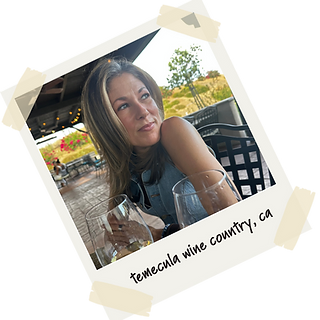
Kimberly Artley.
One home for the behavioral work.
The writing.
The teaching.
The consulting.
The questions.
And everything nearly two decades of dogs and humans have taught me to see.
For a long time, my life looked like a collection of different roads.
Looking backward, I don’t think it was.
I think I kept following the same questions into different rooms.
What is actually happening here?
What are we missing?
What is this behavior communicating?
What does this individual need?
What are we contributing?
What are we teaching without realizing we’re teaching it?
And once we understand what’s really happening—
what can we build differently?
None of it was a detour.
The work kept changing shape.
The reason for it never did.
And now, the work is taking physical form.

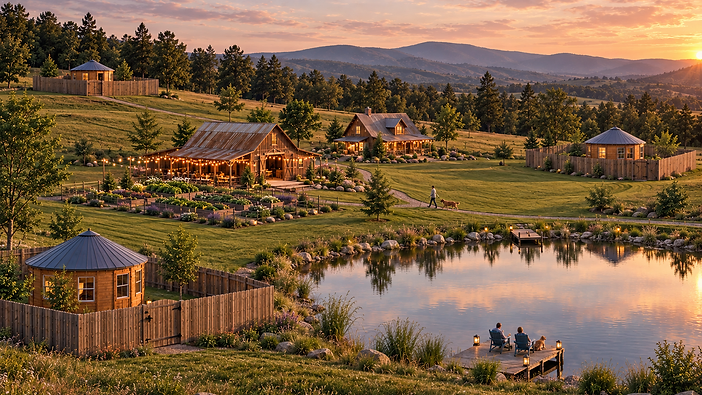
The Copper Dog Ranch
RESCUE · LEARNING · RETREAT CENTER
A new way forward.
HEAL · LEARN · GROW
A sanctuary. A school. A community.
For both ends of the leash.
The Copper Dog Ranch is the next expression of this work — a place where rescue, learning, wellness, relationship, and (re)connection come together.
Envisioned as a living, breathing extension of everything I teach, write about, and build, it will create space for dogs and people to slow down, learn differently, heal differently, and understand one another more deeply.
It isn’t a departure from the work.
It’s where all of it has been leading.
Help build what comes next.
The Copper Dog Ranch is a vision in development — and some visions are meant to be built together. Learn more about the vision, the people and resources we’re seeking, and the ways you can help bring it to life through The Architects.
Explore The Architects